Passionfruit Processing Yield Loss Points: Where Recoverable Juice Disappears
Passionfruit is profitable when the plant controls pulp behavior early and keeps losses from compounding through the line. For a tropical fruit juice plant, small inefficiencies at receiving, pulping, seed separation, enzyme treatment, clarification, transfer, and tank bottoms can show up as lower press yield, slower clarification, heavier filtration load, inconsistent batches, and avoidable downtime.
Enzymeforjuice supports processors with enzyme solutions built for industrial fruit juice operations. For plant managers, the objective is not a theoretical improvement. It is a cleaner process window: lower mash viscosity, better juice release, more predictable clarification, reduced hold-ups, and repeatable throughput across seasonal fruit variation.
If you are evaluating an enzyme supplier for fruit juice processing, the starting point should be a practical loss map.
1. Receiving: variation enters before the line starts
Passionfruit arrives with natural variation in ripeness, pulp structure, peel condition, seed load, and soluble solids. If receiving controls are loose, the process inherits inconsistent mash behavior before enzyme treatment even begins.
Common loss points include:
- Overripe fruit increasing soft solids and handling losses
- Underripe fruit giving tighter pulp structure and slower juice release
- Mixed lots producing inconsistent viscosity and clarification behavior
- Delayed processing increasing pulp breakdown before controlled treatment
- Excess foreign material adding load to cleaning and separation stages
Production-led control point
Receiving should feed the process with lot intelligence. Track fruit condition alongside process outcomes: mash viscosity, separation efficiency, turbidity after treatment, filtration differential pressure, and final tank bottoms. This helps distinguish raw material variation from process underperformance.
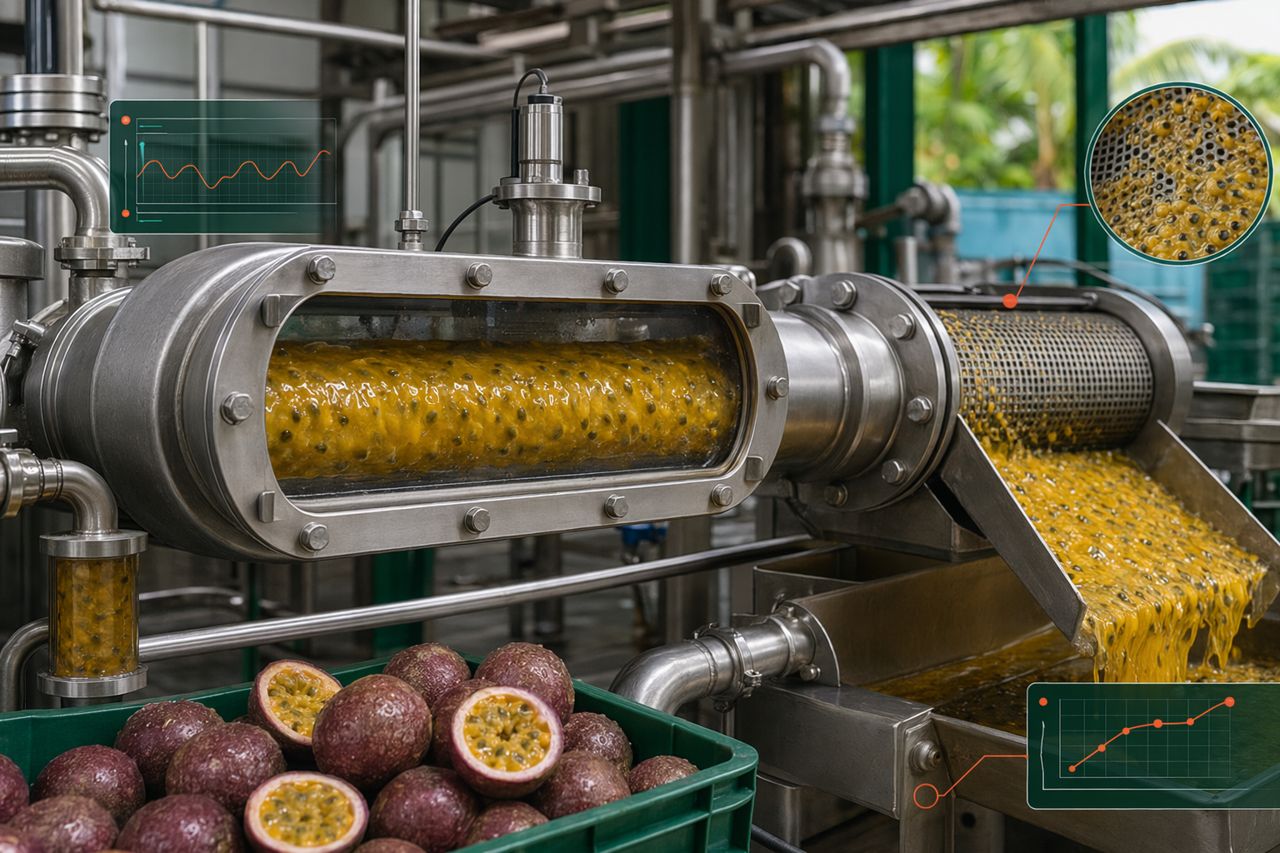
2. Pulping: aggressive extraction can create downstream drag
Pulping is often where operators chase yield with mechanical intensity. With passionfruit, that can backfire. Excessive shear can increase suspended solids, fragment tissue, and create a heavier clarification burden.
Losses at pulping may appear as:
- Higher mash viscosity after extraction
- More fine solids entering enzyme treatment
- Increased carryover into clarification
- Lower filtration cycle length
- Additional cleaning frequency due to sticky pulp deposits
What better control looks like
A balanced pulping setup releases juice without overloading the later stages. The right enzyme program can help open pulp structure and improve juice release, but it works best when mechanical handling avoids unnecessary fines generation.
3. Seed separation: the hidden yield-versus-quality tradeoff
Passionfruit seed separation is a critical yield loss point. Under-separation sends seed fragments and solids downstream. Over-separation can hold valuable juice in the wet seed fraction.
Watch for:
- High moisture in separated seed mass
- Juice retained in screen rejects
- Seed abrasion increasing suspended particles
- Fluctuating separator performance between fruit lots
- Unplanned stoppages caused by seed-heavy pulp surges
Plant manager takeaway
Do not measure seed separation only by cleanliness. Measure it against recovered juice and downstream stability. A dryer reject stream is not always better if it creates fines or slows the rest of the plant.
4. Enzyme treatment: the main lever for viscosity, release, and clarification speed
Enzyme treatment is where passionfruit processing can move from reactive troubleshooting to controlled performance. The right enzyme solution can reduce pulp viscosity, improve juice liberation, support more efficient separation, and shorten clarification time.
Avoidable losses during enzyme treatment usually come from:
- Incomplete mixing across thick mash
- Inconsistent retention time between batches
- Temperature drift during treatment
- Enzyme selection that does not match the fruit matrix
- Under-validated processing windows for seasonal variation
Enzymeforjuice focuses on process-fit enzyme solutions for fruit juice plants. The target is not simply adding an ingredient. The target is a measurable operating improvement: easier pumping, faster settling or clarification, lower suspended solids load, improved press yield, and more consistent batch release.
Practical validation questions
Before changing enzyme supply, ask:
- Does the enzyme solution reduce viscosity under actual plant conditions?
- Does it improve juice release without creating excess fine solids?
- Does it shorten clarification or holding time?
- Does it reduce filtration pressure build-up?
- Does it help standardize batches across different fruit lots?
- Does the supplier support trial design and production interpretation?
5. Clarification: slow settling ties up tanks and labor
Clarification loss is not only juice lost to sediment. It is also time lost to waiting, tank occupancy, operator intervention, and filtration overload.
In passionfruit processing, poor clarification can create:
- Extended holding before filtration
- High turbidity carryover
- Thick sediment layers with trapped juice
- Variable bright juice quality between batches
- Increased need for rework or blending adjustments
Operational signal
If clarification time changes sharply between fruit lots, the enzyme treatment window may be too narrow. A robust enzyme program should help produce a more consistent clarification profile, even when pulp properties shift through the season.
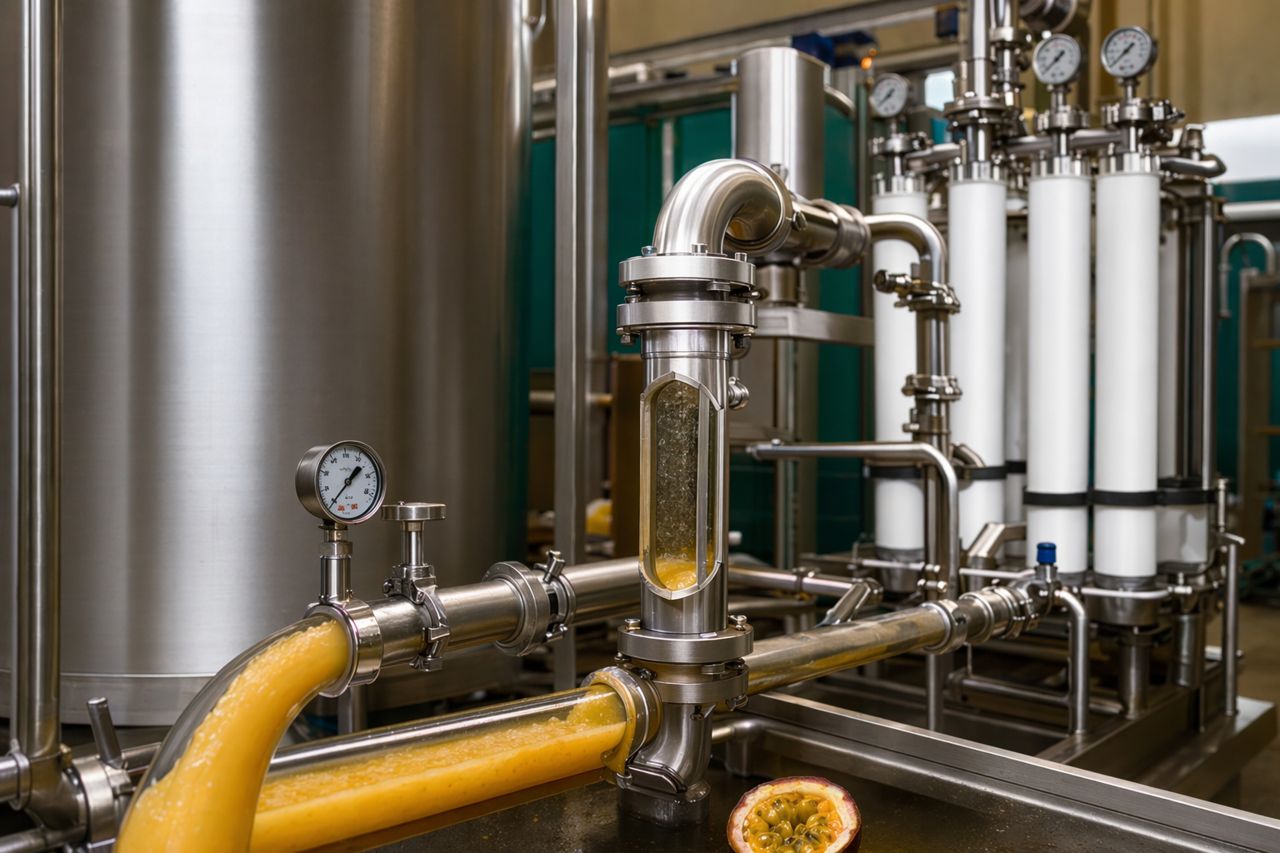
6. Transfers: yield is lost in lines, elbows, pumps, and dead legs
After treatment and clarification, passionfruit juice still faces losses during transfer. Viscous pulp residues, suspended solids, and trapped juice in pipework can add up across multiple batches.
Typical transfer losses include:
- Juice retained in hoses and pipework
- Solids settling in low-flow sections
- Product left in pump housings and valves
- Increased rinse volume during changeover
- Downtime from line cleaning and blockage removal
Where enzyme performance helps
Lower viscosity and cleaner separation behavior can reduce line hold-up and make transfers more complete. This does not replace good pipe design and disciplined CIP practice, but it can reduce the burden on both.
7. Filtration load: upstream choices decide downstream capacity
Filtration issues are often treated as a filter problem. In passionfruit juice processing, filtration load is usually decided much earlier: receiving mix, pulping intensity, seed separation quality, enzyme treatment performance, and clarification efficiency.
Signs that upstream losses are reaching the filter include:
- Short filter runs
- Rapid pressure rise
- Frequent media changes
- Inconsistent flow rate through the same setup
- Higher labor demand during peak production
A well-matched enzyme solution can support lower suspended solids carryover and more stable filtration behavior. The commercial value is direct: longer operating windows, fewer interventions, and better use of installed capacity.
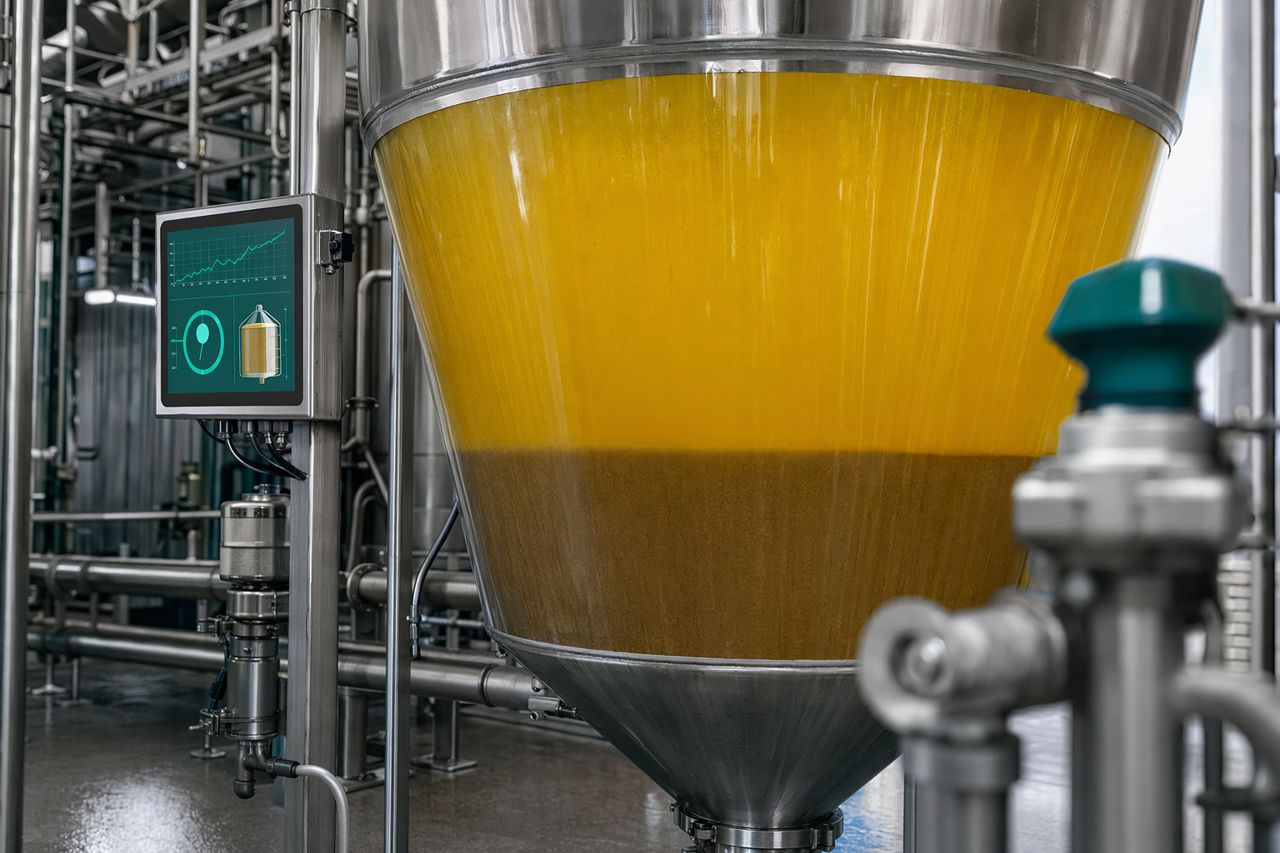
8. Tank bottoms: do not ignore the last recoverable fraction
Tank bottoms are a visible place to find hidden loss. Thick sediment, cloudy draw-off, and trapped juice in settled solids can reduce sellable yield and complicate cleaning.
Tank bottom losses often increase when:
- Enzyme treatment does not fully condition the pulp
- Clarification is rushed to free tank space
- Sediment compacts inconsistently
- Operators leave a larger safety margin to protect quality
- Batch variation makes draw-off decisions uncertain
Better control target
The goal is a cleaner separation between saleable juice and heavy solids. When clarification is more predictable, operators can draw down with more confidence and reduce conservative product loss.
Building a yield-loss map for passionfruit processing
A practical yield-loss review should follow the fruit from receiving to final transfer. Enzymeforjuice recommends mapping each stage against process measurements plant teams already understand.
Use a simple structure:
- Receiving: fruit lot condition, holding time, visual pulp quality
- Pulping: mash viscosity, solids generation, extraction consistency
- Seed separation: reject moisture, seed carryover, separator stability
- Enzyme treatment: mixing quality, retention consistency, viscosity drop, clarification response
- Clarification: turbidity trend, sediment volume, tank occupancy time
- Filtration: flow stability, pressure rise, cycle length, intervention frequency
- Transfers and tank bottoms: product hold-up, draw-off confidence, cleaning burden
This map helps isolate whether yield loss is driven by raw material, mechanical handling, enzyme fit, tank practice, or filtration load.
Why enzyme supplier selection matters
Choosing an enzyme supplier for fruit juice processing is a production decision. The supplier should understand plant constraints, not just product labels.
For passionfruit, ask for support that connects enzyme performance to:
- Throughput stability
- Mash viscosity reduction
- Press and separation yield
- Clarification speed
- Filtration load reduction
- Batch-to-batch consistency
- Downtime and cleaning impact
Enzymeforjuice works with tropical fruit juice processors to align enzyme selection with real operating targets. Trials should be designed around your line, your fruit, and your commercial bottlenecks.
Request a quote for passionfruit processing enzyme support
If your plant is seeing yield loss, slow clarification, high filtration load, or inconsistent passionfruit batches, Enzymeforjuice can help define an enzyme solution for validation.
Request a quote through the on-site contact form and share your fruit type, process stage, current bottleneck, and target improvement. Our team will respond with a practical supply and trial discussion for your juice plant.